

ARK-1
Next-Generation Highly Selective HDAC6 Inhibitor
Potential Applications: Oncology • Neurodegenerative Diseases • Neuropathic Pain
Development Stage: IND Submission Planned (FDA & TFDA)
ARK-1 is a novel small-molecule HDAC6 (Histone Deacetylase 6) inhibitor, designed to Address Limitations of Pan-HDAC Inhibitors, originally developed at Taipei Medical University and exclusively licensed to TARK Biopharma in 2023.
The program is being developed to address significant unmet medical needs across oncology and central nervous system disorders through selective modulation of HDAC6, a therapeutic target implicated in tumor progression, neuroinflammation, protein homeostasis, and neuronal function.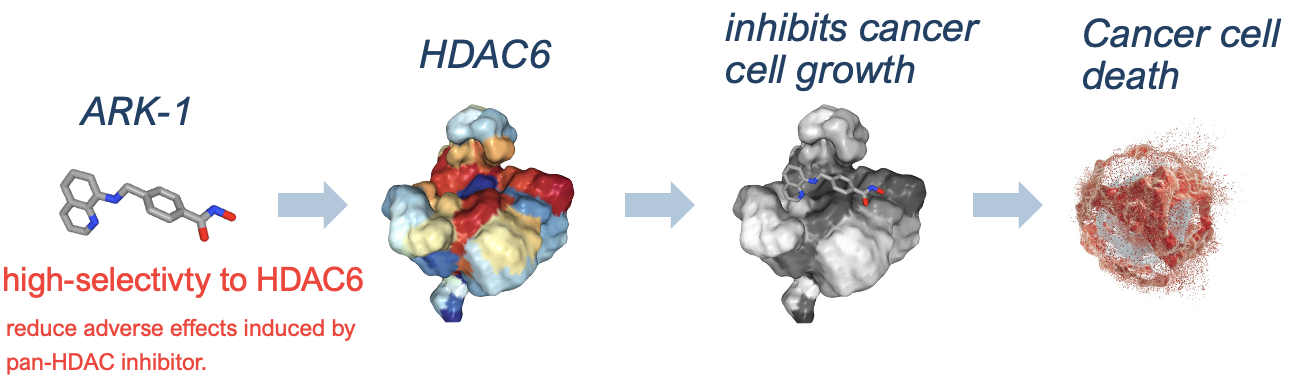
Why HDAC6 Selectivity Matters
| Pan-HDAC Inhibitors | ARK-1 |
| Multiple HDAC Targets | Selective HDAC6 Targeting |
| Broad Off-Target Activity | Reduced Off-Target Activity |
| Limited Tolerability | Potentially Improved Tolerability |
| Restricted Long-Term Use | Potential for Chronic Administration |
Several approved HDAC inhibitors have demonstrated meaningful clinical benefit. However, broad inhibition of multiple HDAC isoforms has been associated with hematologic, gastrointestinal, and cardiovascular toxicities that may limit long-term treatment and combination therapy opportunities.
ARK-1 was specifically engineered to achieve exceptional selectivity for HDAC6 while minimizing off-target activity and inhibition of other HDAC family members, supporting a differentiated profile with the potential for improved tolerability.
Key Differentiatiors
-
Highly Selective HDAC6 inhibition:
ARK-1 potently inhibits HDAC6 and demonstrates 7,000–40,000-fold selectivity over HDAC1, HDAC2, and HDAC3, substantially exceeding the selectivity reported for clinically evaluated HDAC6 inhibitors such as ricolinostat (ACY-1215) and citarinostat (ACY-241). - Minimized Off-Target Activity:
Kinome profiling across 97 kinase targets demonstrated minimal off-target interactions, supporting a highly selective pharmacological profile. -
Combination Therapy Potential:
ARK-1 demonstrated synergistic anti-tumor activity when combined with multiple standard-of-care therapies, including paclitaxel, bortezomib, irinotecan, vincristine, temozolomide, gemcitabine, and PD-1 blockade across multiple tumor models. -
CNS Development Potential:
ARK-1 demonstrated blood-brain barrier penetration and showed activity in preclinical models relevant to chemotherapy-induced peripheral neuropathy (CIPN) and Alzheimer’s disease.
Development Status & Future Plans
-
Preclinical Development Completed:
ARK-1 has successfully completed all preclinical studies. TARK Biopharma is currently advancing formulation development and manufacturing scale-up preparations to support future clinical development. -
Phase I Clinical Development:
TARK Biopharma is preparing Investigational New Drug (IND) submissions to both the Taiwan Food and Drug Administration (TFDA) and the U.S. Food and Drug Administration (FDA), with plans to initiate Phase I clinical studies to evaluate the safety and tolerability of ARK-1. -
Broad Development Potential:
Preclinical studies have demonstrated the potential of ARK-1 across multiple therapeutic areas, supporting future development opportunities in oncology, neurodegenerative diseases, and neuropathic pain. -
Strategic Partnerships:
TARK Biopharma is actively engaging with pharmaceutical and biotechnology partners worldwide to explore licensing opportunities and co-development collaborations, accelerating the path toward commercialization. -
Strong Global IP Position:
ARK-1 is supported by a strong international intellectual property portfolio, with granted patents in seven major markets and additional patent applications pending.